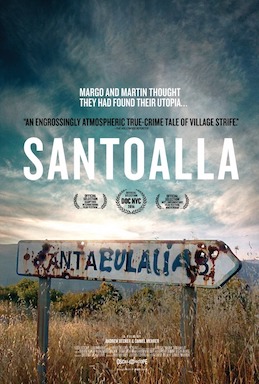
Santoalla (2016)
This is a documentary of a real-life case that inspired award-winning film The Beasts (2022) by Rodrigo Sorogoyen. Dutch couple Martin Verfondern and Margo Pool thought they found their dream home place when they first set foot in the very remote region of Galicia in Spain – a village called Santoalla. However, over the years, the bitter discord and frictions with their next-door neighbours have made severe holes in their dream and perfect life. Martin wanted to renovate and make the village he fell in love with habitable again– did he pay with his life for his efforts? This tale of personal injustice and crime suffered in paradise-like region of Spain is a noteworthy, emotional documentary piece. Martin disappeared without a trace in 2010, and it was only much later that the car he was travelling in on the day of his disappearance was found abandoned in a distant part of Galicia.
Andrew Becker and Daniel Mehrer’s film starts with the presentation of one Dutch couple’s “overseas dream” in the true spirit of the American Dream. Martin Verfondern and Margo Pool were young, newly-married and wanted to go to live somewhere in Europe, where there is plenty of nature, beautiful scenery and the opportunity to be self-reliant by just interacting with soil and animals. Santoalla, a small rural village in the mountainous region of Spain, seemed perfect, and the couple fill in love with their new home, which was then just a pile of rubble they had to rebuild. The courage and sacrifice they made to reach this distant part of Spain and try to settle down all on their own should be alone sufficient to elicit the greatest admiration and respect from anyone. But, the pressure from the neighbours not to change anything and not to try to get the money allocated for the common land increasingly made Martin and Margo’s idyllic life a hell. This was especially so for impressionable Martin, who wanted to get to the bottom of his neighbour’s dissatisfaction.
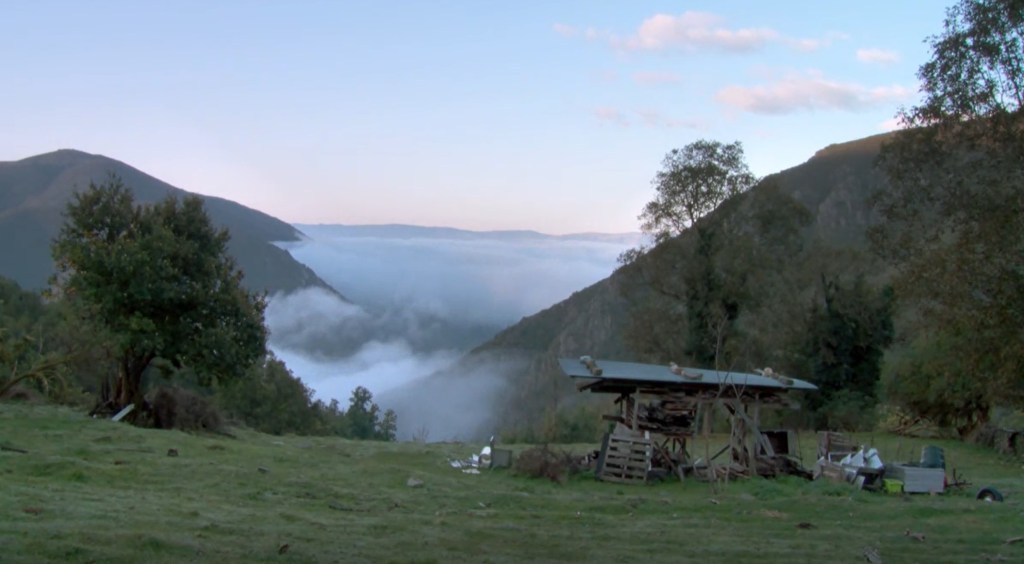
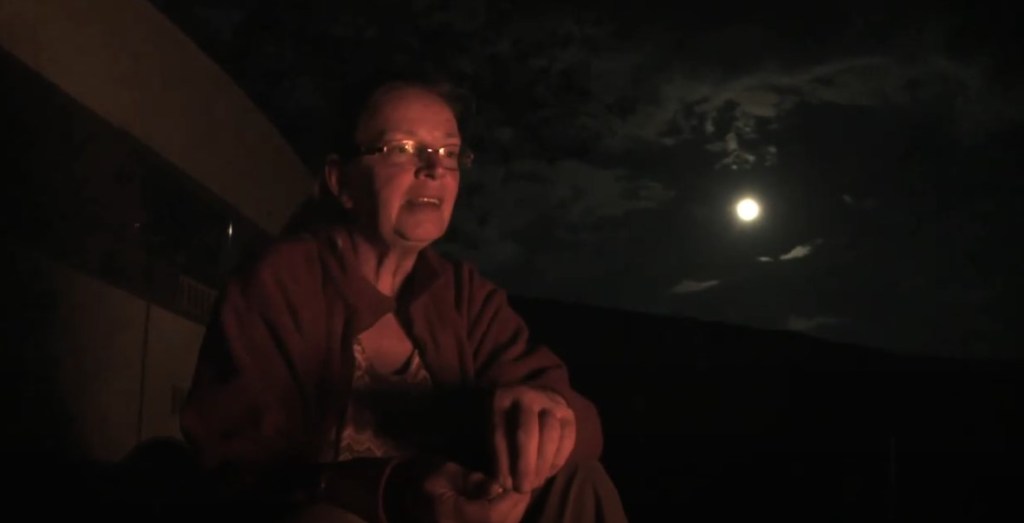
The interviews with Martin’s widow, Margo Pool, and the neighbours, as well as the footage of Martin himself, shed light on the life the couple lived prior to Martin’s disappearance, particularly emphasising the great beauty of the region, Martin’s good intentions and the gradual change in him: from a happy-go-lucky, guitar-playing man, he gradually morphed into one worried, much preoccupied with his neighbour’s position, expat. However, amidst the misunderstanding, grief and hurt following Martin’s disappearance and the crime committed, the directors still manage to make their film a tribute to the good times the couple once had, as well as a stance against xenophobia and for the promotion of the neighbourly spirit. At one point, Margo is asked: “How can you live so close to a family that may be responsible for your husband’s death?” “Well, Martin’s dream is still alive [here]”, she replies. That is also the spirit of this documentary. Its final act, when it has already become clear that some criminal action is the cause of Martin’s disappearance, lags behind the rest of the film and its intensity, but can also be forgiven and taken as a much quieter final adieu to Martin and his memory.
Throughout the documentary, it becomes clear that Martin was an inspirational figure and is definitely a man to be remembered. Even those who did not see the film The Beasts, will find Santoalla a worthwhile documentary and a truly touching tribute to the beauty of Galician countryside and to one resilient spirit that wanted only the best for this region and its community. This is one “small” documentary with one very big heart.
 Spotlight on Film
One Comment Add yours