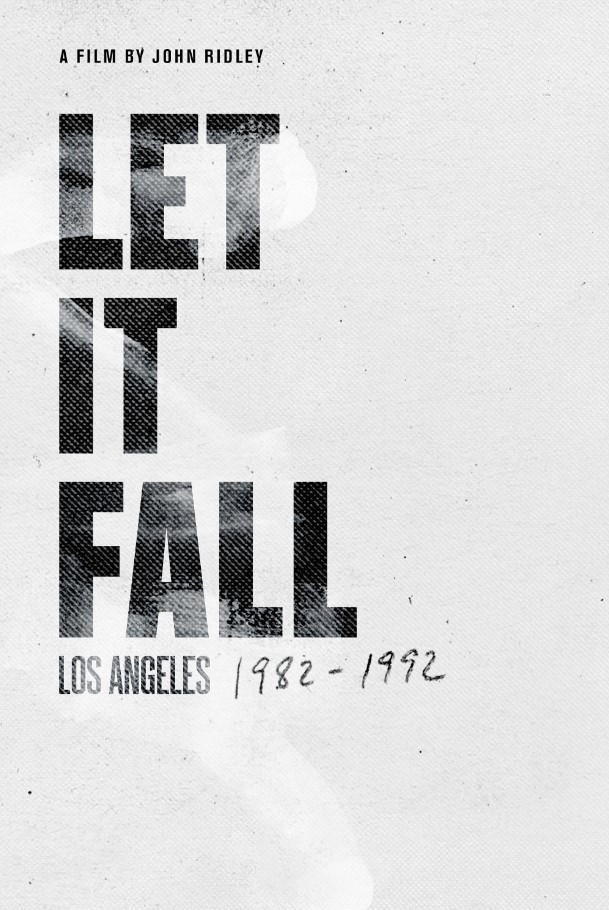
Let It Fall: Los Angeles 1982-1992 (2017)
“Before we find world peace, we gotta find peace and end the war in the streets“; “It ain’t about black or white, ’cause we human” (Tupac’s song lyrics). Documentary Let It Fall puts hate, anger and racism on trial, documenting Los Angeles just before, during and after the infamous 1992 riots that were partly caused by a number of police officers’ acquittal in the severe beating of black man Rodney King. Director John Ridley (also the scriptwriter of 12 Years a Slave) takes an all-encompassing, multi-faceted approach to telling the story of the city before and during the riots, using archive footage and numerous interviews that aim to shed light on the causes of the riot and present numerous sides to the conflict, for example, the perspectives of the black and Korean communities, as well as the predominantly white law enforcement. What was their state at the time, and how exactly they felt about and responded to events leading to the 1992 Los Angeles riots?
The documentary starts as a tale of two sides of one city – the optimism of the 1984 Olympics and the presence of Tom Bradley, Los Angeles’s first black mayor, contrasts with the increasing brutality of the procedures employed by the police at the time in their dealing with black suspects and offenders, including the now banned chokehold, and the sheer poverty and exclusion of certain parts of the the city: “There are many parts of LA that have been neglected for a very long time”, says Linda Griego, once Deputy Mayor of Los Angeles. The film tells us that it is when the violence between rival gangs started to be felt in previously deemed safe parts of the city that the police also stepped up its techniques and racial tensions also deepened. This is far from one sided, documentary, however, and though we hear of justified anger such as the one following the killing of a fifteen-year old girl Latasha Harlins by a Korean business-owner for an allegedly stolen bottle of orange juice and her trial, we are also shown the side of some police officers who tell of the brutal force they were told to use against crime suspects in certain cases.

The documentary fares best when it stays focused on one issue at a time, and it is its over-ambitious, “scattered” approach that essentially lessens its overall impact. At one point, it tries to show the perspectives of a number of communities to the situation and the unfolding riot, especially the view of certain members of the Korean community, at another – hint at possible socio-economic causes of the situation that led to the riot, including poverty, drugs and the rise of gang culture, and yet at another – tell us about the extent of racial profiling and the responsibility of Daryl Gates, Chief of the LAPD at the time. A more direct, focused approach would have fared much better.
Made after the Black Lives Matter movement gained some ground, but before the murder of George Floyd in 2020, Ridley‘s film is definitely on a crusade to share with us many details of the riot and events that led to it. By stringing together important historical footage surrounding the 1992 Los Angeles riots, as well as past and present interviews, the piece becomes an insightful, educational documentary, albeit suffering from its own all-encompassing ambition. Considering its overall effect and thesis, any of Tupac’s short quotes would probably hit home much harder.
 Spotlight on Film
We’re headed in the right direction with the police brutality but nowhere near there. Cell phones that can record video are useful to deter. With the economic injustice, we haven’t even yet begun to walk toward it and are probably walking in the opposite direction.
LikeLiked by 1 person