Originating as the fishing village of Edo on the Sumida river in Japan, the city of Tokyo is currently one of the world’s most magnificent capitals. The metropolis, boasting more than thirty-six million inhabitants in its widest reach, fuses and lets coexist modern and traditional cultures like no other city on the planet does, capturing the imagination of millions of people. From neon-lit, fashionable Shibuya to the “shopping-heaven” of Ginza to the green pastures of northern Tokyo, the city can offer wonders to the most hardcore pop culture enthusiasts, technological gurus and followers of Eastern spirituality. Unfathomably thematically diverse, endlessly wondrous, it is as though the city’s slogan is – “to define is to limit”.
As Japanese painter Hiroshige (1797-1858) wanted to convey Edo’s unique landscape and increasingly vibrant life so long ago in his famous art series One Hundred Famous Views of Edo, numerous film directors then and now also desired to capture the city’s multi-faceted character on screen. Moreover, with Tokyo being one of the world’s hubs for technological innovation, it also served as a source of boundless inspiration for some sci-fi filmmakers who tried to imagine near-future through Japan, including Tarkovsky in Solaris and Ridley Scott in Blade Runner. So, here are 10 awe-inspiring films set in Tokyo, a city of many paradoxes and stark contrasts.
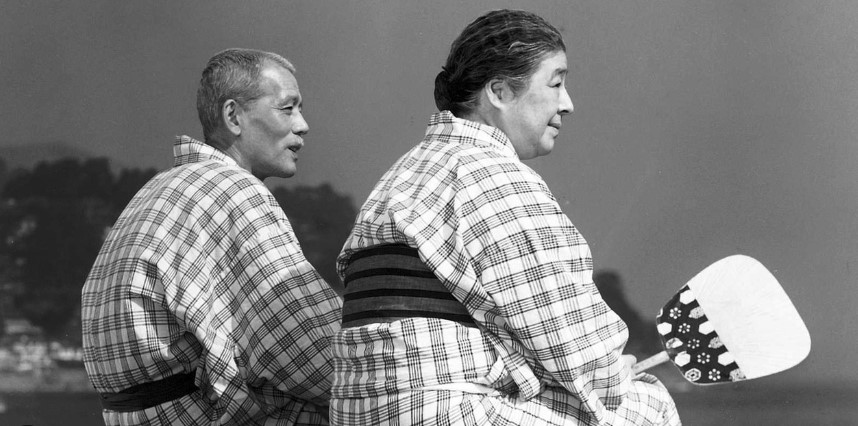
Tokyo Story (1953)
I will venture to say that this is Yasujirō Ozu’s greatest cinematic achievement. This film of a family whose older generation gets ignored is an iconic tale of the passage of time and changing norms. As Tokyo re-builds itself after the World War II, marching optimistically forward, it may have left something behind – forgotten something essential. Ozu captures the then country’s zeitgeist through this drama of a generational conflict. When elderly couple Shukishi and Tomi Hirayama (Chishū Ryū and Chieko Higashiyama) visit their children and grandchildren in Tokyo, it is supposed to be a pleasant, relaxing visit for the couple, full of attention and love. However, Shukishi and Tomi unexpectedly find themselves being a burden to their city-living children, whose active life in hectic Tokyo seems to leave no time for the parents.
This is a subtle, heart-breaking film that is one of the world’s finest. Ozu’s elegant shots, including his famous “tatami shot”, instil a contemplative aura that is pierced by quietly devastating realisations. Ozu believed that we can only truly understand the bigger, transcendental truth through the portrayal of something smaller and the mundane. We do not just get Ozu’s vision in Tokyo Story – we feel its implications.
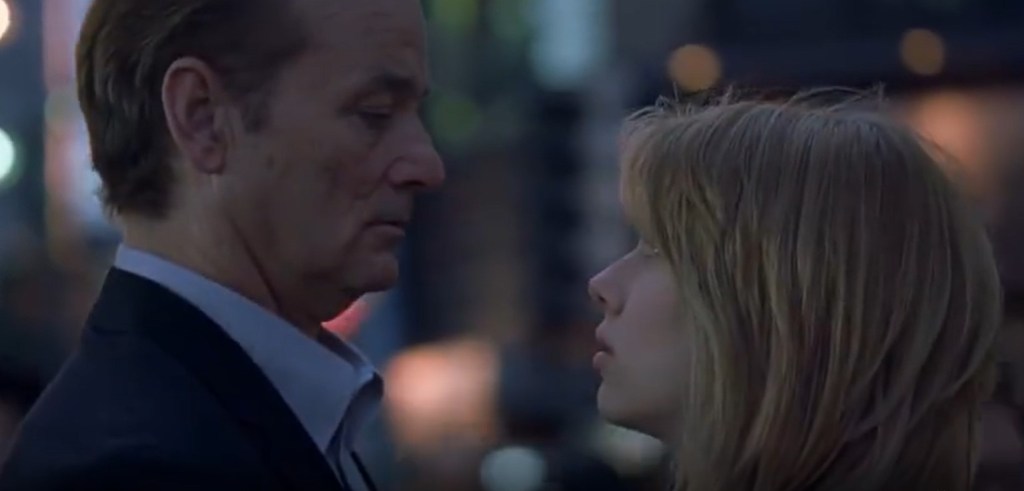
Lost in Translation (2003)
Japan is so linguistically and culturally complex, with a myriad of nuances in everyday interactions to be aware of, that it is little wonder that tourists in the city feel particularly alienated. Chaotic Tokyo may be difficult to navigate both psychologically and physically even for native Japanese, and it is in this background of exotic perplexity and Tokyoite melancholy that director Sofia Coppola sets her romantic drama Lost in Translation. Amidst feelings of internal confusion about life directions and environmental isolation, two people make an unlikely connection in the centre of Tokyo – fading movie star Bob Harris (Bill Murray) and married Yale graduate Charlotte (Scarlett Johansson).
Coppola’s film provides a glimpse of a primarily foreign experience of Tokyo: Shinjuku Park Tower, Park Hyatt Tokyo, and Shibuya’s scramble crossing, among other places, but the vision of Japan is no less startling for that fact. This deeply touching film is a warm reminder of the power of human connection.

Tokyo Godfathers (2003)
Satoshi Kon’s animation about three homeless people (alcoholic man Gin, trans-woman Hana and runaway teenager Miyuki) discovering an abandoned baby-girl amidst piles of garbage on one Christmas Eve is not just an exciting adventure story about societal outcasts – it is a story of urban, 21st century Tokyo. Kon presents the usually-unseen-by-tourists Tokyo, demonstrating the brutality of life on the street in the centre of the city. We find out that the other side of colourfully-lit, lively Shinjuku hides hunger and want. We will not be feeling indifferent.
Both realistic and uplifting, Tokyo Godfathers is a unique animated work of art. Its insightful themes of Japan’s harsh social situation: homelessness, poverty, bullying and discrimination still slowly unveil a touching core – warmth for others and hope for the future.
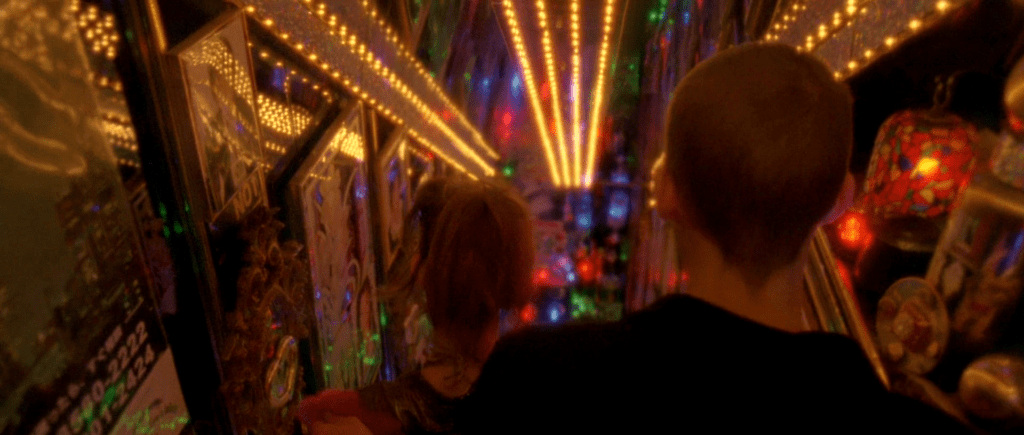
Enter the Void (2009)
Gaspar Noé’s psychedelic cinematic experience, Enter the Void is all about Tokyo at its most blazing, playful, dangerous, and forbidden. In this story, Oscar (Nathaniel Brown) is an American drug dealer living in Tokyo with his sister, with whom he is very close. He gets murdered after a police raid, but, instead of just dying, his soul transports to other plane of existence. This out-of-body trip is full of surprises and revelations, unveiling the past and the meaning of the present.
It is Noé’s direction and Benoît Debie’s cinematography that bring the full scope of the story’s unusualness to the surface. Noé’s neon-lit Tokyo of murky night clubs, and dangerous habits and activities is hard to shake off, but so is most of other work by this subversive director. This stuff is once seen never forgotten.
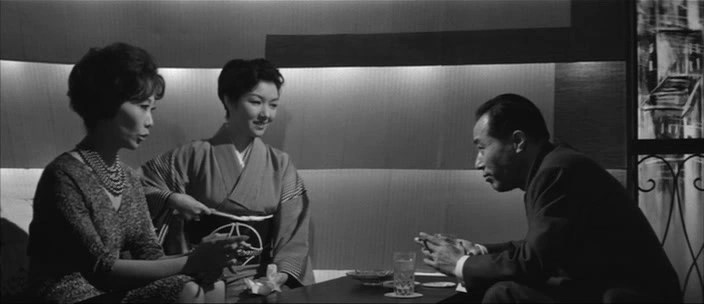
When a Woman Ascends the Stairs (1960)
If Yasujirō Ozu’s films were all about bringing out nuances in familial dynamics and showing how they shed light on broader societal concerns, his compatriot Mikio Naruse offered a different perspective in his cinema, giving central stage to his female characters. In film When a Woman Ascends the Stairs, Keiko (Hideko Takamine) works as a hostess in a whiskey bar in one upscale Ginza district of Tokyo, dutifully going through her motions at work, while keeping the memory of her already dead husband alive. Soon though, her dilemma becomes pressing – should she follow everyone’s expectations and re-marry or continue striving for independence, the latter slipping away from her day by day?
This is a Ginza bar story, but it also showcases an important theme of the woman’s position in a deeply hierarchical Japanese society, anchored by Hideko Takamine’s performance of subtlety and inner awareness. This was Tokyo of the 1950s – pining for modernity and change after the gloomy years of war, but still rooted in medieval traditions. In director Naruse’s sure hands and carried on the lead shoulders of Takamine, When a Woman Ascends the Stairs becomes a tender story of a heart-break for the future lost.
Tokyo Sonata (2008)
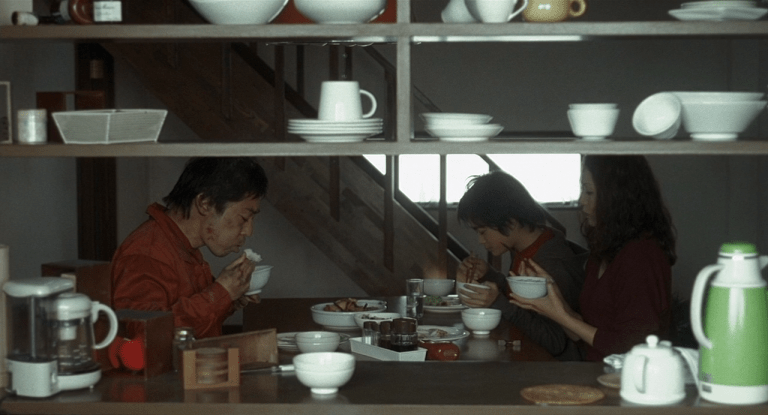
Tokyo Sonata is not a usual Kiyoshi Kurosawa film, but it dissects middle-class Tokyoites with the precision of a surgical knife, and, by way of blood, leaves behind numerous sharp glass fragments, from once manufactured, but now fractured appearances, on which his characters step over and over again, bleeding.
From the outside respectable middle-class family consists of father Ryuhei Sasaki (Teruyuki Kagawa), whose pride makes him keep up his game of self-importance despite being recently sacked, obedient, but soon rebellious, wife Megumi Sasaki (Kyōko Koizumi), older son Takashi (Yū Koyanagi), leaving the family to join the American army, and younger son Kenji (Kai Inowaki), the one with musical aspirations. This is a peculiar family drama that only Kurosawa could have envisaged. The family represents Japanese society as a whole in tatters, their internal despair and, hence, imminent disintegration on an individual level is fuelled by miscommunication, false appearances and ingrained fears of failure.

Tokyo Olympiad (1965)
Kon Ichikawa (The Burmese Harp (1956), Fires on the Plain (1959)) is the director of this documentary about the 1964 Summer Olympics in Tokyo. Far from being a historic narrative promoting the organisation of the sporting event that Japanese government commissioned from Ichikawa (their first director choice was Akira Kurosawa), Tokyo Olympiad proved to be a quite non-traditional take on a standard Japanese documentary.
Its vivid scenes prioritise the experience of athletes over the event’s pomposity or medal tables. With many touching moments and shots of athletes striving and battling primarily against themselves and against the odds, it is an intimate, visually-astonishing film, and must be one of the best ever documentaries about the Olympic Games.
Perfect Days (2023)
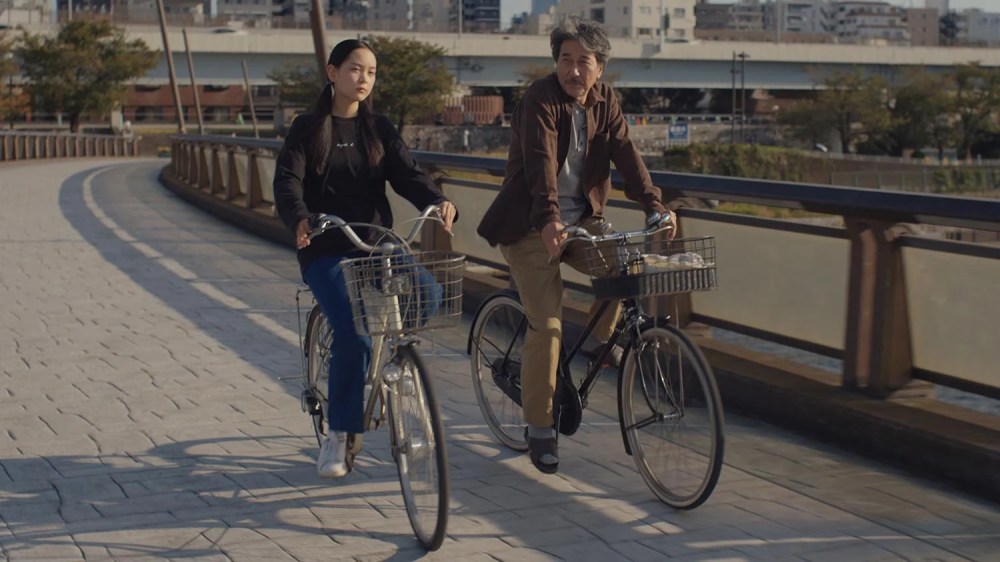
Tokyo is definitely a fully-realised character in this soothing, nostalgic film from Wim Wenders (Wings of Desire (1987)). It spotlights touristy areas in Tokyo’s Asakusa and Shibuya, as it also introduces us to some unusual, architecturally-wondrous public toilets located in Ebisu Park, Yoyogi Fukamachi Mini Park, and other areas.
In this story, Hirayama (Kōji Yakusho) is a middle-aged, single man working around the city cleaning toilets, while indulging in a number of hobbies, including music, plants and photography, in his spare time. The story is nothing more than that, but Kōji Yakusho’s portrayal of one free-spirited, kind and curious man in one unlikely profession is so “staggeringly real and heart-warming” that the overall result is quite delightful.
Nobody Knows (2004)
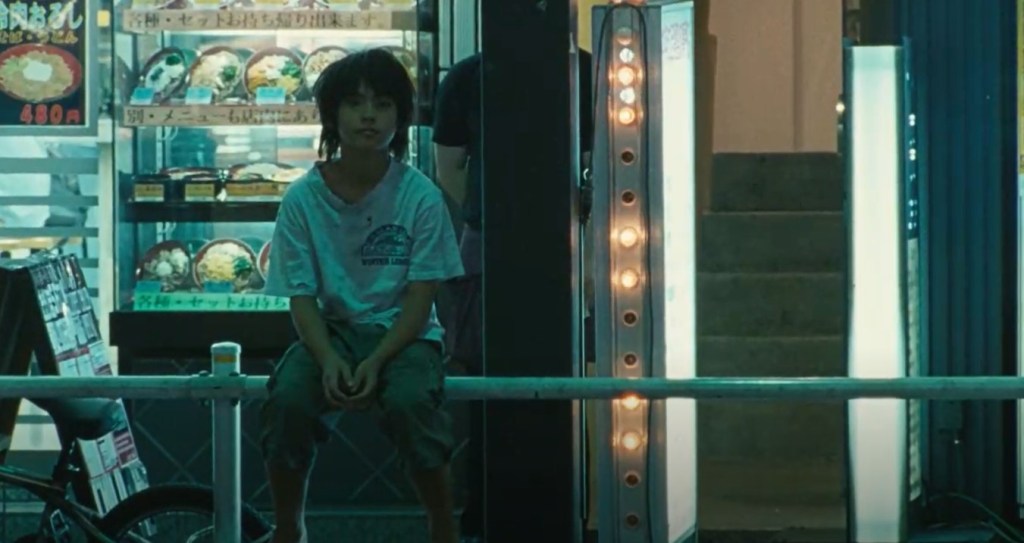
Hirokazu Koreeda’s film was inspired by a true Tokyo story that occurred in 1988 when newspapers reported the Sugamo child abandonment case. A mother left her five children for months and that resulted in the death of one of them. Tokyo functions as an all-seeing, but largely indifferent backdrop to this tragedy, slowly unveiling the hidden dysfunctions of its seemingly law-abiding populace. Of course, it is the most innocent who suffer the most in these kind of situations – children.
The child actors deliver stoic performances in this observational film with a tragic ending. Koreeda will return to a similar theme in Shoplifters, but Nobody Knows is still a haunting, thought-provoking work from acclaimed Japanese director who is now the torch-bearer of the “social problem” film just like Ozu was when he illuminated his times’ pressing social concerns through film in the 1950s.
Godzilla (1954)
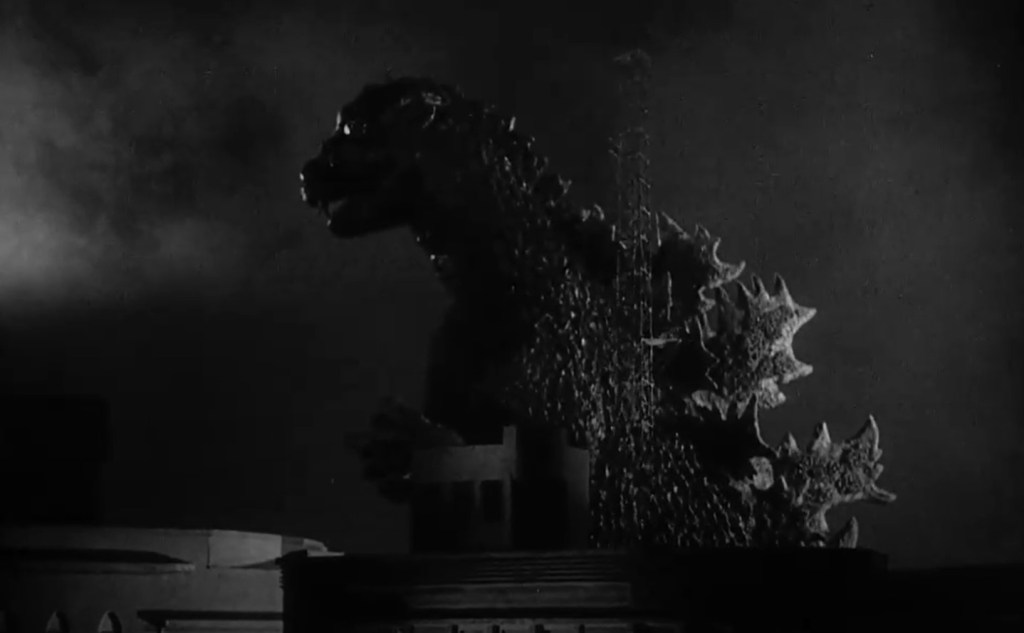
There is no Tokyo film list without a Godzilla film. From the ashes of the war and fuelled by prevalent Japanese anxieties about nuclear power, there emerged in 1954 the embodiment of all the fears – Godzilla, a 50-meter-tall “whale-gorilla” hybrid of a monster, the destroyer of cities. It was inspired by American film The Beast From 20000 Fathoms (1953), the King Kong‘s success, as well as by the Daigo Fukuryū Maru incident that exposed Japanese fishermen to radiation form the US nuclear fallout in 1954. Godzilla also turned out to be a much easier sell abroad than any envisaged realist film made from the Japanese perspective because of some anti-Japanese sentiment at the time.
Godzilla symbolises much about the war and the nuclear arms race, but it is also a breakthrough horror entertainment in its own right, an awe-inspiring cinematic achievement. It impresses not necessarily with its plot, visuals, effects or lack thereof, but with its singular imagination, the sheer scale of the monster on display and the dazingly horrifying devastation it creates.
 Spotlight on Film
I’ve seen multiple Japanese movies both live action and animated. Many of them take place in Tokyo, so there would be too many to list. Haha! Tokyo Godfathers is such a great movie and it was nice to see Satoshi Kon’s work in this list.
LikeLiked by 1 person
Sure, and I will never get tired talking or praising Satoshi Kon with you. Yesterday I saw a list of 100! greatest animations of all time from one prominent critic with thousands of followers and he never included or mentioned any of Kon’s animations even once. This is just beyond me.
LikeLiked by 1 person
Absolutely! I’m glad to see other people who’ve seen his works. They didn’t have any Satoshi Kon movies in that 100 Greatest Animations list? BLASPHEMY! Has this critic not watched any of his movies or realize stuff such as Inception and Black Swan literally wouldn’t exist without Paprika and Perfect Blue respectively?
LikeLiked by 1 person
Exactly! It just leaves in me in so much shock every time I see it.
LikeLiked by 1 person
I don’t blame you. Kon deserved so much better and I wish he was still alive right now. Do people not actually know about Japanese animation besides Ghibli or whatever is on TV?
LikeLiked by 1 person
Very interesting list there, nice mix of choices. Turner Classic Movies aired Tokyo Olympiad recently in honor of the games this year, and I still need to check it out. For me, Japanese Cinema will always be Akira Kurosawa, he such a master at storytelling, and had a fine knack of bringing out emotions from the audience. Yasujiro Ozu was a mix of Douglas Sirk (minus the Soap Opera storytelling), Leo McCarey, and Frank Capra – he loved telling stories of the everyday people of his country, and the various emotions they go through when dealing with the varied life situations they encountered. I don’t think any other contemporary or successor showed the stoic-ness, honor, integrity, and resilience of the Japanese people better than Ozu did. Ishiro Honda’s original Godzilla was a major revelation to me, what a mixture of traditional monster movie and Anti-War Allegory.
LikeLiked by 1 person
Sure, I hope you enjoy Tokyo Olympiad! You put it so well about Kurosawa and Ozu. Also, what seems to be on the first glance easy to replicate in a certain Ozu’s scene or sequence, is actually quite hard or actually impossible to do with as much nuance and subtlety that he managed it – definitely an absolute master.
LikeLiked by 1 person
Lost in Translation was my first introduction to the aura of Tokyo and is one of my favorites… I forgot about Enter The Void; of course that’s only bc I have not seen it. Satoshi Kon, legend. Godzilla’s great closer here🗼🦖 bravo
LikeLiked by 2 people
Thanks! I am glad you enjoyed the list. I almost forgot Enter The Void myself, need to re-watch, been a very long time.
LikeLike