Japanese films portraying Japan just after its defeat in the WWII show the toll that the events had on the populace, including want, poverty, devastation, identity crisis, and guilt. There was a time of the great upheaval, and slowly changing norms. For many people, “life will never be the same again”, and Japanese directors tried to convey this feeling as fully as possible in cinema. Later, economic boom and prosperity gave much hope as the country was rebuilding itself, but not before its people had to move on with the remnants of trauma felt in each segment of their life. Below are five films that showed Japan after the war, capturing a curious zeitgeist as the country tried to make sense of its new situation and environment.
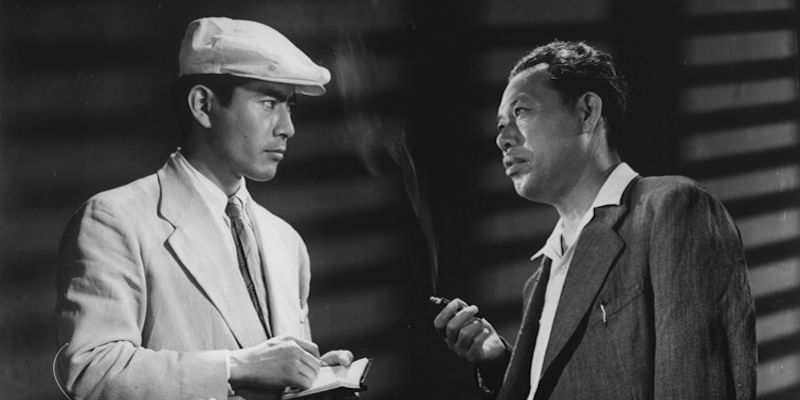
Stray Dog (1949)
Akira Kurosawa captured the chaos of the post-war Tokyo environment in noir-styled Stray Dog. Homicide detective Murakami (Toshiro Mifune) commits a “rookie” mistake and loses his gun in a theft. His attempt to track down the thief leads him to undercover missions that would test his endurance as they uncover new, post-war Japan riddled with identity crisis, shame, guilt, and black markets sustaining the economy. His journey into the criminal underworld also unveils issues with his own identity and place in the world, and there is a generational conflict here too as more seasoned Detective Satō (Takashi Shimura) calls Murakami an “après–guerre child”, who came of age at the time of the country’s transition and may not be as determined to maintain honour or traditional values, and may even be more tempted than others to cross the lines of morality. Kurosawa’s directional choices are often interesting and appear innovative in this story that can, nevertheless, try our patience more than a few times.
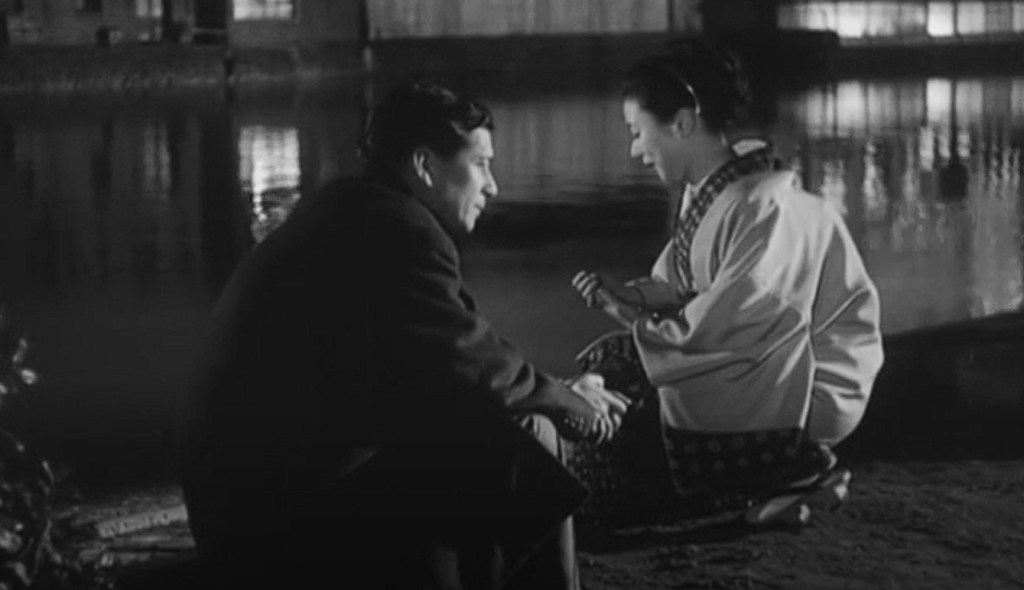
An Inn at Osaka (1954)
This Heinosuke Gosho film, based on the novel of the same name by Takitarō Minakami, tells of an insurance worker (Shūji Sano) who has been demoted from Tokyo to an Osaka office, and get a lodging in one unassuming inn. The town inhabitants’ obsession with money in the environment dominated by want and unemployment soon clashes with his own spirit of maintaining dignity and honour. As he sees people’s self-esteem gets tramped in the process, he tries to help, but it is not so easy to reverse a new, materialistic way of thinking that emerged in Japanese people’s consciousness post-war. Beneath its apparent simplicity, there, in fact, hides a rather complex film, which is a delicate expose of societal traumas of Japan still in the process of rebuilding itself after the war. In its vivid, thoughtful, character-driven presentation of complex themes without much undue sentimentality, this film could probably equal many of Ozu’s masterworks.
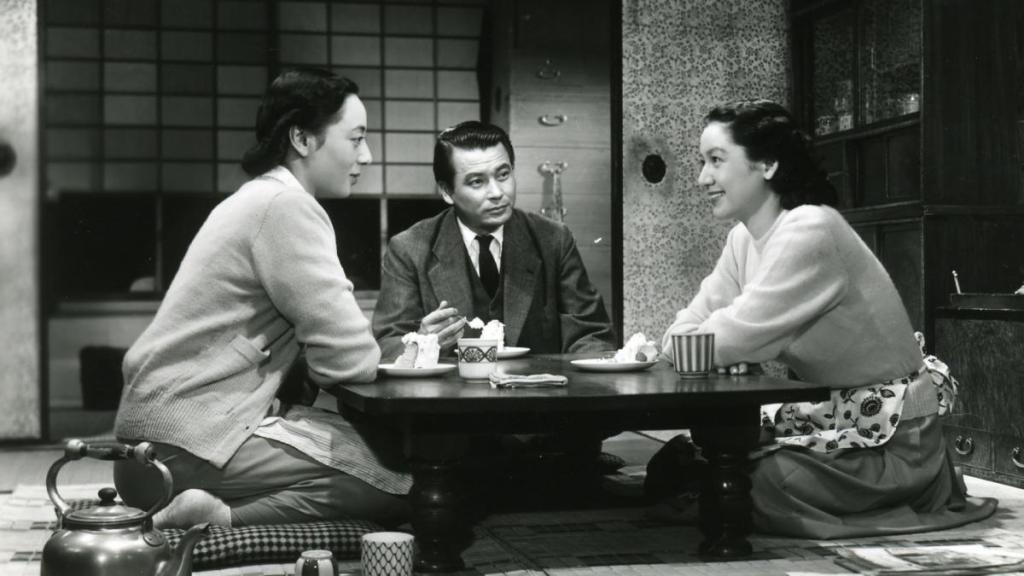
Early Summer (1951)
Yasujirō Ozu was, of course, the master of capturing the divisions and contradictions of post-war Japan, and Early Summer is no exception to his line of work that tries to distil the themes of generational conflict, tricky familial dynamics, and the changing position of women in the strictly hierarchical Japanese society, especially after the WWII. The ever wonderful Setsuko Hara takes the central stage here as twenty-eight-year old Noriko, an unmarried woman who is greatly attached to her immediate extended family without thinking about getting married herself. All that changes when her uncle pays the family a visit. This is one of Ozu’s finest and quietly heart-breaking pictures, which, nevertheless, has many moments of ambiguity and joy. The uncomfortable position of Noriko in her extended family, and then her final destiny, can be described as one of the quintessential Japanese life experiences where duty, societal expectation, love and desire are deeply inter-linked.
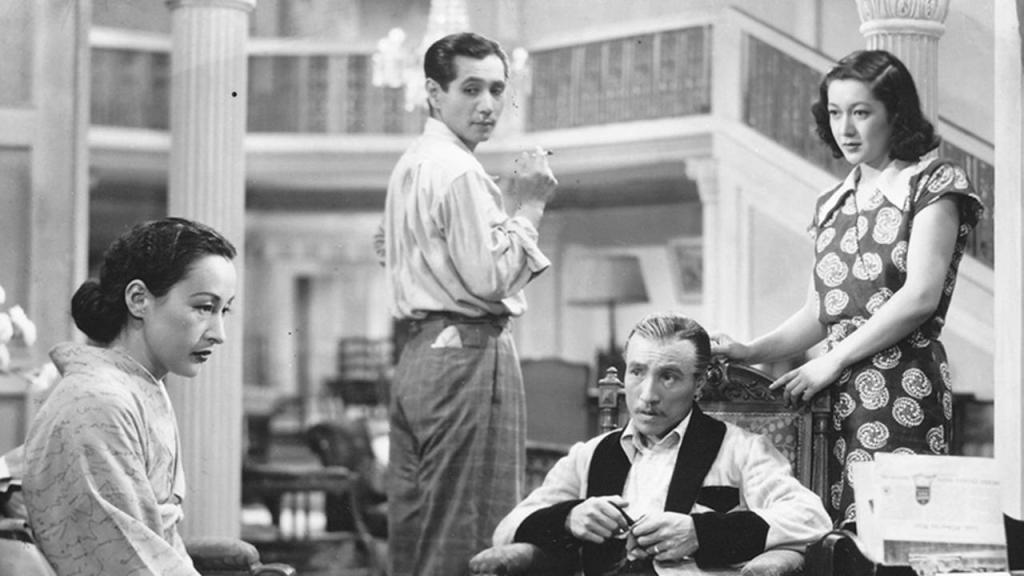
The Ball at the Anjo House (1947)
This film by Kōzaburō Yoshimura is a story of one aristocratic family in Japan “fallen on hard” times after the war. As their big luxurious house is facing sale and they are faced with the prospect of employment for the first time, a member of the family decides it would be a good idea to host one last ball. This is a not-so-subtle critique of the behaviour of the youth aristocracy post-war, exemplified in the film by the wayward son of the family, Masahiko (Masayuki Mori), who is prone to debauchery. He had started a relationship with the family’s maid a long time ago, and the eldest daughter of the family, Akiko (Yumeko Aizome), once also had an on-off-relationship with the driver of the family, who has now risen to the position of some prominence. Certain suspect melodrama in this film still does not detract anything from its strong themes, interest or overall conviction around such topics as the nature of family, the reversals of class standings, and the inescapable passage of time necessitating fast adaptation to new circumstances. Besides, Setsuko Hara as Atsuko Anjō and Osamu Takizawa as Tadahiko Anjō undoubtedly make one of the most moving on-screen father-daughter relationships.
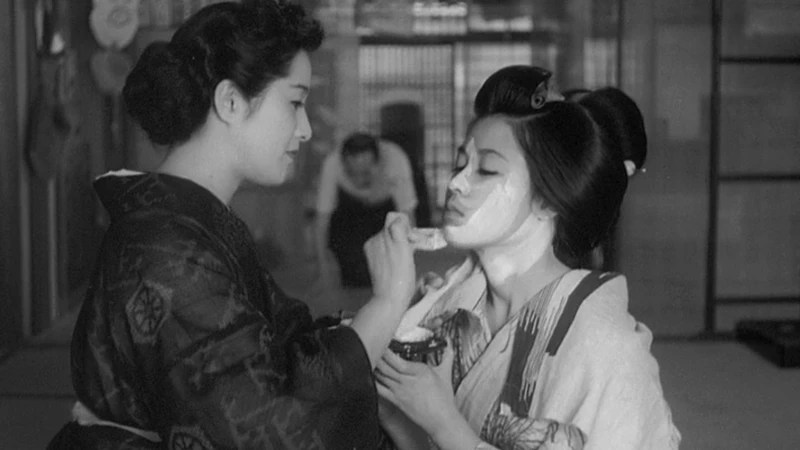
A Geisha (1953)
An important film in Kenji Mizoguchi’s filmography, A Geisha tells of the slowly changing nature of the geisha work after the WWII, signalling further liberation and empowerment of women in Japanese society. When free spirited, but very inexperienced sixteen-year-old Eiko (Ayako Wakao) arrives to a geisha house in Kyoto, she only wants to make a clean break from her father who wants nothing to do with her, and to follow in the footsteps of her late mother. An older geisha, Miyoharu (Michiyo Kogure), taker Eiko under her wing, promising nothing, but when the steep learning curve is proving too much for young Eiko, who is oblivious as to the amount of sexual favours that may be implicit in their work, Miyoharu slowly becomes the protective figure to the young girl and also a woman who slowly also realises her own worth and professional standing. The acting is top-notch, and all the emotional undercurrents and well-suited pace mean we are deeply involved in each step of this story of two geishas one generation apart.
 Spotlight on Film