This post is my belated, modest tribute to Gene Hackman (1930-2025), a great actor whose versatility and effortlessness on screen will continue inspiring generations to come. The scene I chose to focus on is from Alan Parker’s drama Mississippi Burning (1988), that concerns two FBI agents, Rupert Anderson and Alan Ward, played by Gene Hackman and Willem Dafoe, who go to small town in Mississippi to investigate the disappearance of three civil rights workers in 1964. The film is not perfect and is a product of its time (two white guys (“rescuers”) descend on a small town to condemn racism, while the film hardly features any black people, for example), but it has many redeeming qualities, including the charm and acting of Gene Hackman.
In this scene, Agent Anderson (Hackman) visits Mrs. Pell (Frances McDormand), the wife of the man that the duo of FBI agents suspect to be involved in the disappearance of the men. Initially, Mrs. Pell thinks that the agent wants to speak to her husband, who is absent, and is surprised that Anderson actually wants to speak to her. It is almost a blasphemy to call this scene between McDormand and Hackman an “acting” scene because McDormand and Hackman are so natural in it, and create such a touching chemistry, it is almost magical (if this word is ever applicable to a film of such gruesome and serious nature).
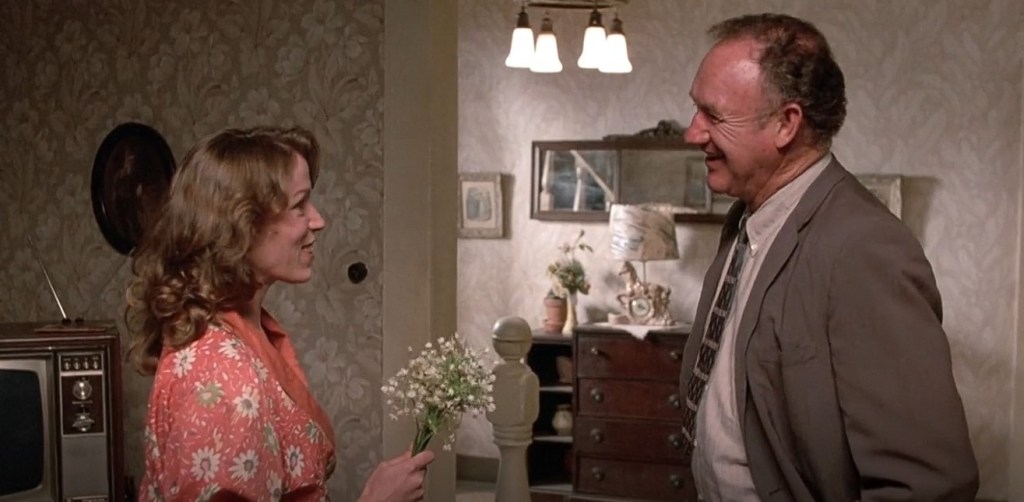
The connection surprises us, but the sheer simplicity and effortlessness of interaction is also arresting. Anderson brings Mrs. Pell flowers and is genuinely interested in her as a person, a gentlemanly conduct and affection that this woman probably has not experienced with her own husband for quite some time. The chemistry between the two is not necessarily romantic here, but appears to be that of two human beings connecting on a deep level despite having different backgrounds and simply engaging in a small talk. What is incredible is that neither McDormand nor Hackman either “overdo” or “underdo” their parts here, something which could have easily happened.
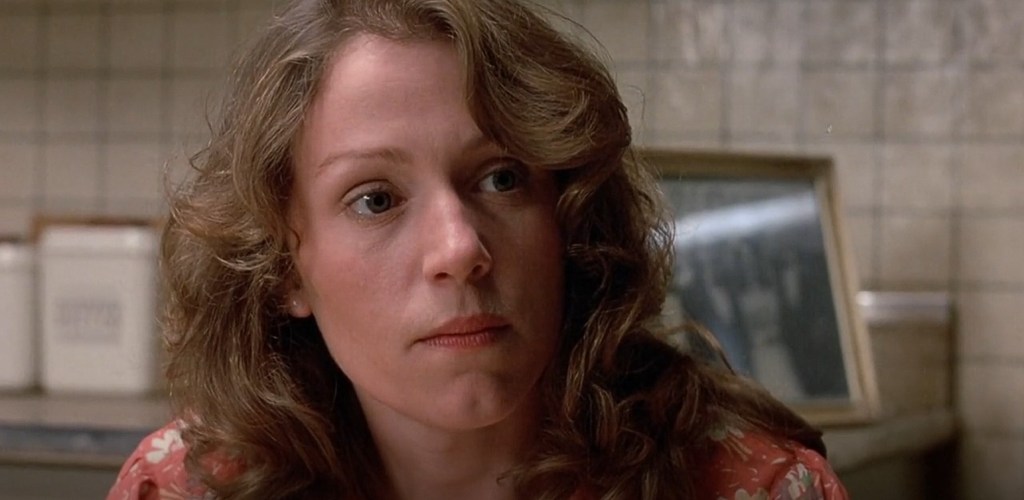
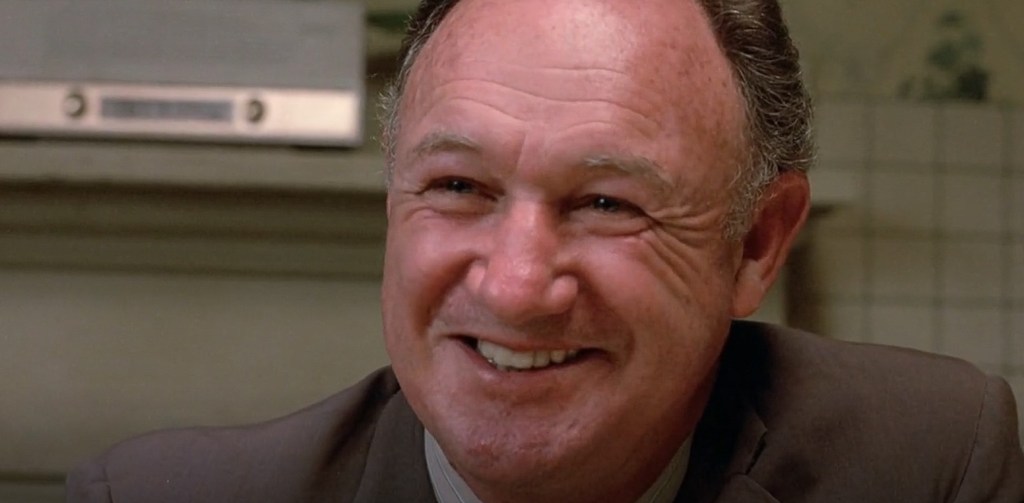
“You know about the South, Mr. Anderson. You leave high school, and marry the first boy who makes you laugh”, shares Mrs. Pell her own tale of marriage. We know the characters have established a connection of trust because Anderson starts sharing with Mrs. Pell his own insecurities and faults, divulging to her that the reason he is now a single man and no longer married is because he was a husband who was always absent from his wife’s life.
Though the genuineness of Anderson’s feelings for Mrs. Pell cannot be doubted, he is still in her house for a reason – to ensure that she is telling him the truth that she really was with her husband during so-and-so time, thus providing him with an alibi for the crime. Even so, the duo of actors create such a special scene, their characters could be anywhere and possess any jobs, and we would still be transfixed by their interaction.
The actors’ eyes also speak volumes in the scene, and especially at the end of it, when Anderson is about to leave Mrs. Pell, there is a special look he gives her as she explains to him the meaning of the flowers he gave her. There is some pity in his eyes, but also admiration and warmth for this woman, who is actually not telling him the truth about her husband. This scene is just full of unforgettable simplicity and thought-provoking nuances that most films of today have chosen to forego.
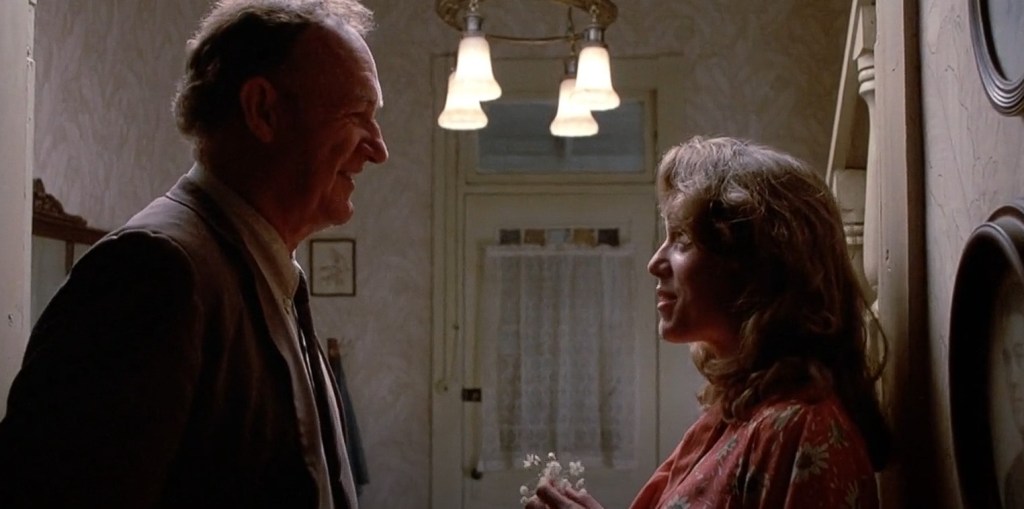
The scene is also so special because, unlike the majority of films nowadays, it is completely unrushed, does not intend to have any agenda, or make grand gestures or big points, and yet is also full of meaning. It simply presents two people who find themselves on the opposite sides of a story, but who still start enjoying each other’s company, and that is also movie magic (since it is not all special effects, action or complex sequences). If we realise that, and consider these quiet scenes of human beauty as valuable to film as any sprawling, bombastic and hectic spectacles (if not more valuable!) then the future of cinema is secured.
 Spotlight on Film
Hello, I found this page while googling this scene. It’s a shame I can’t find the author but I appreciate the date. I was curious about what she meant when she was explaining the flowers. ‘The insects are attracted to the pretty colours and then they’re dead before they even got their shoes off.’ Is she the killer’, is her husband? Hackman’s character replies maybe I should’ve chosen something more appropriate, which I took to mean he doesn’t agree with the assessment of herself. What do you think? Thanks,
LikeLiked by 1 person
I think he knows she is not herself the killer, but the close association with the husband makes her somewhat complicit through her silence and the lie. I think you are very right – McDormand character’s remark about the flowers being “insect-eating” points to her hinting at something harmful (untrue) hiding behind the façade of ordinary and sweet, and he should not take her words at face value (he knows it too because he picked those flowers). I also think that Hackman character’s reply is somewhat harmless and just polite, though, rather than intentionally pointing to something. But this is also my interpretation, and yours is just as valid. You raised an interesting point, thanks!
LikeLike